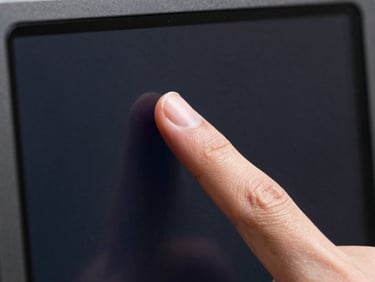
Extreme close-up of a single fingertip pressing a dark glass touchscreen, studio strobe light isolating the contact point, cyan refraction at the touch edge, black background
/ Interaction Engineering

Built around the mechanic. Every time.

Three case studies. Each one started with a specific touch problem no existing engine solved. Here is what we built and how the interaction behaves.
Overhead close-up of developer hand holding Android device mid-swipe gesture, studio strobe light, dark matte surface beneath, motion blur on fingertip
Close-up of fingertip resting on a dark screen showing a frozen animation frame, clean studio strobe, single sharp highlight on the glass surface
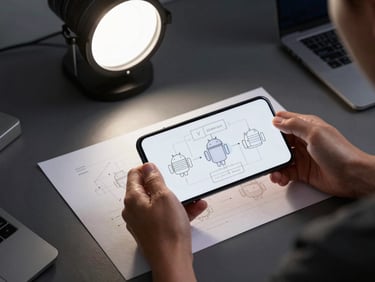
Wide shot of a developer at a dark desk holding an Android device with a wireframe interaction diagram visible on paper beside it, overhead studio light
— Selected Projects

Three problems. Three custom builds.

Gesture Disambiguation
Frame-Perfect Timing
Touch Latency

Swipe vs. Flick Resolver

Haptic Sync Engine

Sub-16ms Input Pipeline

Two gestures sharing 80% of their motion signature. We engineered a per-frame velocity curve that separates intent at the 14ms threshold without false positives.

A rhythm mechanic required haptic pulses aligned to animation frames within ±2ms. We built a custom choreographer that bypasses the standard vibration API entirely.

A combat mechanic demanded input response under one frame. We rewrote the touch dispatch chain to skip the compositor queue and feed directly into game logic.

Every brief starts with the interaction problem.

How We Work

We read the mechanic spec before we read anything else. Touch latency targets, gesture conflict maps, and frame-budget constraints define the architecture — not the other way around.

Have a mechanic that needs Android?

Send us the interaction brief. We scope against the touch problem, not a feature list.